


Flower blossoms, moon full, Lantern Festival night; perfect time and beautiful scenery to celebrate reunions.
author: Anita
2024-02-24
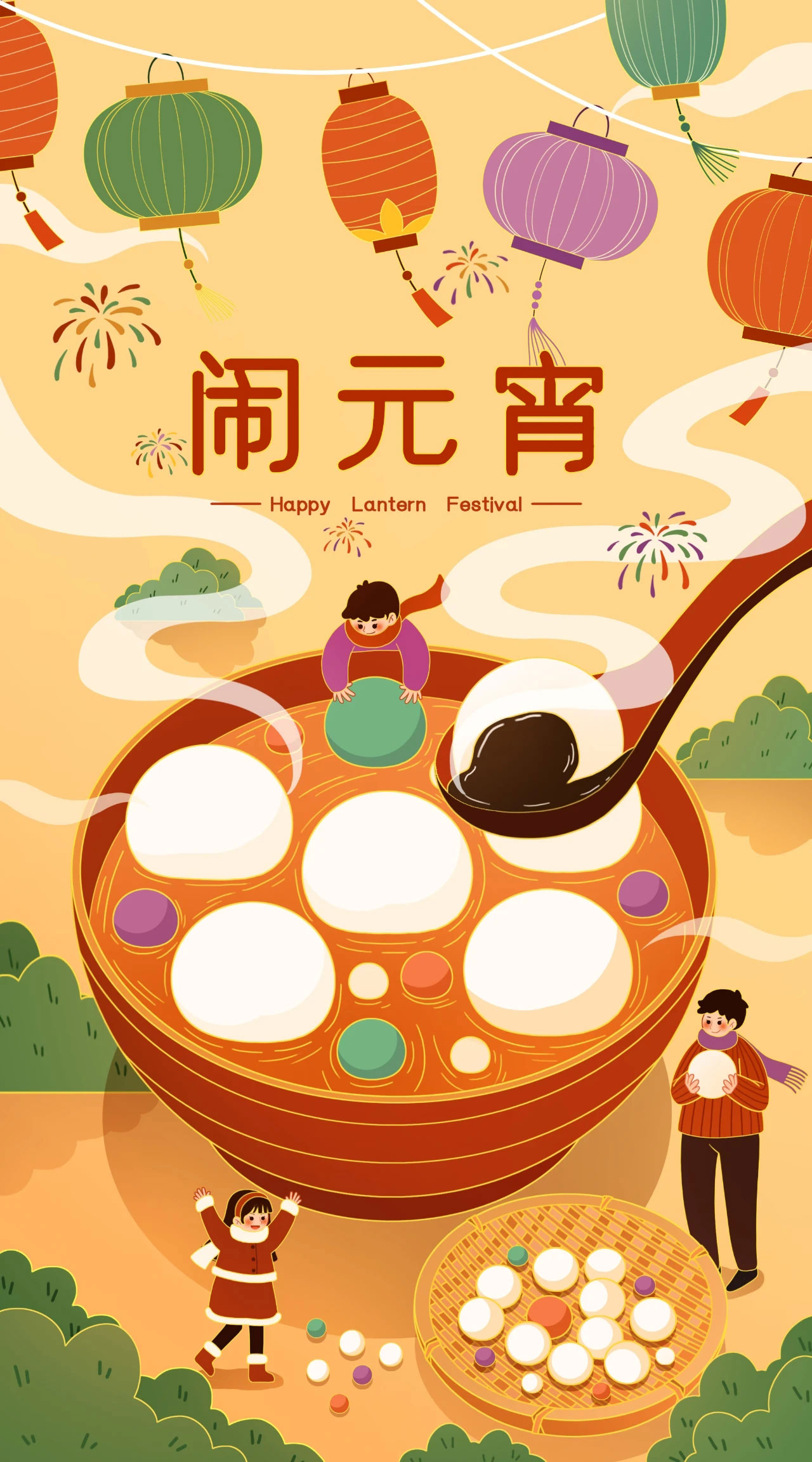
The 15th day of the first lunar month, also known as the Lantern Festival,
is the first important festival after the Chinese New Year.
The Lantern Festival is a traditional holiday in China and in areas with a Han Chinese culture, including Chinese communities abroad.
It is also known as the Shangyuan Festival, Shangyuan Jie, Xiaozhengyue, Yuexi, or the Festival of Lights.
The duration and customs of the Lantern Festival have expanded over time with historical developments.
During the Han Dynasty, it only lasted one day, while in the Tang Dynasty, it lasted for three days.
In the Song Dynasty, it lasted for five days, and during the Ming Dynasty, it lasted for the longest time,
starting with lighting lanterns on the eighth day of the year and ending on the 17th day of the first lunar month.
It is the longest lantern festival in Chinese history and is incredibly lively since it immediately follows the Chinese New Year.
The Festival's brilliant and colorful lantern displays have become the highlight of entertainment activities during the spring festival period.
During the Qing Dynasty, additional entertainment like dragon and lion dances, dragon boat races, stilts walking, and yangko dancing were added.

Lantern Festival customs:
Eating yuanxiao (glutinous rice balls) on the fifteenth day of the first lunar month is a long-standing tradition in China.
The ingredients and flavors of yuanxiao vary, but the meaning behind the act of eating them is the same -
representing family reunion and happiness, and the hope for prosperity.
There is a saying in Chinese culture that harmony brings wealth.
Family harmony and reunion are crucial factors for a complete family, thus, it is important to eat yuanxiao with family during the Lantern Festival.
Yuanxiao, also known as tangyuan, is a traditional food that originated in the Song Dynasty.
Yuanxiao, also known as tangyuan, is a traditional food that originated in the Song Dynasty.
At that time, it was known as "floating round子" or "tang round子," "milk-sugar round子," "tang wuan," "tangtuan," and businessmen called it "yuanbao."
During the early Yuan Dynasty, yuanxiao had already become a traditional festival food for the Lantern Festival, so people began calling it "yuanxiao."
Nowadays, it is known as yuanxiao in the north and tangyuan in the south.
Yuanxiao can be divided into two types - with filling and without filling.
Yuanxiao can be divided into two types - with filling and without filling.
For the filled ones, the fillings can be salty, sweet, meaty, or vegetarian.
There are also different ways to make yuanxiao, such as hand-crafted, machine-made, and boiled in bamboo baskets.
The dough can be made from glutinous rice flour or sorghum flour.

Lanterns, also known as colored lanterns, are a cultural product of China's traditional agricultural era, combining practicality with artistic characteristics.
Lanterns originated from Emperor Wu of Han's offering sacrifices to the most honorable god of Heaven, Taiyi,
on the evening of the fifteenth day of the lunar new year in the imperial palace.
As the ritual lasted through the night, lamps were lit to illuminate the surroundings throughout the night,
marking the beginning of the tradition of hanging lanterns on the Lantern Festival.
After Buddhism was introduced from India to China, the sincere worship of Taoist immortals and the lighting of lamps in Buddhist rituals were combined.
On the night of the fifteenth day of the lunar new year, the city and countryside were brightly lit,
and both aristocrats and commoners hung up lanterns to form a unique blend of traditional Chinese and Western customs.

Guessing riddles with lanterns, also known as "playing lantern riddles", is an activity that emerged after the Lantern Festival,
and lantern riddles originally developed from puzzles and originated in the Spring and Autumn Period and Warring States Period.
Every Lantern Festival, lantern riddles are played in various places, hoping for a joyful and peaceful year. Because riddles can inspire wisdom and interest,
they have been widely welcomed by people from all walks of life in the process of its dissemination.
During the Tang and Song dynasties, various acrobatic skills began to appear in the lantern markets.
In addition to lantern riddles and performances of acrobatics, song and dance,
the lantern markets of the Ming and Qing dynasties also added theatrical performances.
So, when did the custom of guessing lantern riddles during the Lantern Festival begin?

Stilts walking is a popular folk skill performance in China.
Stilts walking is one of the ancient Chinese baixi (the hundred operas), and it has been around since the Spring and Autumn Period.
The earliest known introduction of stilts walking in China was recorded in the book "Liezi - Shuofu":
The earliest known introduction of stilts walking in China was recorded in the book "Liezi - Shuofu":
"There was a man named Lanzi in the Song dynasty, who was skilled in the art of stilts walking. Song Yuan called him and asked to see his skills."
Stilts walking groups are usually organized spontaneously by the masses.
Stilts walking groups are usually organized spontaneously by the masses.
They start stilt walking on the streets from the 11th to the 12th day of the first lunar month,
symbolizing that they want to be recognized among the many folk flower festivals of the year.
The official stilts walking festival takes place from the 15th to the 18th day of the first lunar month.

Lion dance is an excellent traditional art in China. During the Lantern Festival or other festive occasions, people often perform lion dance to add to the atmosphere.
This custom can be traced back to the Three Kingdoms period and became popular during the Northern and Southern Dynasties.
It has a history of more than a thousand years. Lion dance, also known as "lion dancing," "lion lantern," or "dancing lion,"
is often performed during holidays and celebrations.
In the eyes of the Chinese people, lions are auspicious beasts that symbolize good luck,
so lion dance activities express people's good intentions to eliminate disasters and seek prosperity.
The dragon is the totem of China, and the Chinese people worship the dragon as a symbol of good luck.
On the 15th day of the first lunar month, the dragon dance festival has a festive atmosphere with singing and dancing, and is celebrated in many places.

Happy International Women's Day!
2024 Chinese New Year Holiday Notice
Related Article
We'll be closed Sep 25–26 and Oct 1–5. Here's how to plan your Q4 charger orders around our holiday schedule.
Mid-Autumn & National Day 2026 Holiday Notice — Factory Schedule & Order Cut-Off Dates
The Dragon Boat Festival, also known as Duanwu, carries profound cultural meaning – from racing dragon boats to hanging mugwort and enjoying sticky rice dumplings. It is a time to ward off misfortune and pray for peace, health, and prosperity. As we embrace these timeless traditions, we also wish every one of you a joyful and safe holiday.
Peace & Health – Celebrating the Dragon Boat Festival 2026

At Shenzhen Lvxiangyuan Technology Co., Ltd., we believe that progress is built on dedication, passion, and the collective efforts of every team member. As we approach the joyful occasion of International Workers' Day, we want to take a moment not only to celebrate the spirit of labor but also to give our hardworking team a well-deserved pause.This year, in observance of the holiday, our company will be closed for three days – from May 1st to May 3rd. Operations will resume as usual on May 4th.
Honoring Hard Work: A Labor Day Break at Shenzhen Lvxiangyuan Technology

As dawn breaks on March 8, 2026, we mark not just another International Women’s Day but a pivotal moment in humanity’s journey toward equality. This year, the call to action echoes louder than ever: move beyond symbolic gestures and dismantle the structural barriers holding women back.
Beyond Celebration: Rewriting the Future on International Women’s Day 2026