


Why Is GaN Charger So Expensive?
author: Anita
2024-04-09
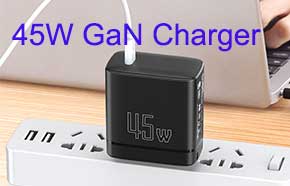
Why Is GaN Charger So Expensive?
In recent years, the development of GaN (Gallium Nitride) technology has led to an increase in the popularity of GaN chargers among tech-savvy consumers.
However, despite its many benefits, GaN chargers are still more expensive than traditional chargers and this has led to a lot of confusion among consumers.
In this article, we will shed some light on why GaN chargers are so expensive.

1. Gallium Nitride (GaN) is expensive.
GaN is a high-end material that is not commonly used in the electronics industry.
The production of GaN is more expensive than other materials such as silicon.
This is because the process of producing GaN involves a complex synthesis of chemical precursors which requires advanced equipment and highly skilled personnel.
The high cost of GaN is, therefore, one of the reasons why GaN chargers are expensive.
Our 45W USB-C Charger is also with GaN technology.

2. Sophisticated technology.
GaN chargers require more sophisticated technology than traditional chargers.
GaN chargers utilize a higher wattage technology which means they are more efficient than traditional chargers.
However, the extensive testing, research and development required to produce a product that is both safe and reliable can be costly.
In addition, GaN chargers require advanced electronic components such as drivers and controllers which are expensive to manufacture.
Our 45w fast charger is also a PD gan charger.

3. High performance.
GaN chargers offer higher performance than traditional chargers.
They are capable of providing a higher output power which results in faster charging times.
This is especially important for tech-savvy consumers who require fast charging times for their devices.
The higher performance of GaN chargers is achieved through the use of advanced technology which is why they are more expensive than traditional chargers.
Our 45 watt laptop charger can be used for laptops, mobile phones and tablets.

4. Low production volume.
GaN chargers are still a relatively new technology and have not yet achieved mass-market penetration.
This means that the production volume of GaN chargers is still low which results in higher manufacturing costs.
As the demand for GaN chargers increases, the production cost will decrease resulting in a reduction in the retail price.
Our usb c 45 watt charger has A+C dual ports can be used 2 devices charging at the same time.

In conclusion, GaN chargers are expensive due to the high cost of production of Gallium Nitride, the sophisticated technology required, high performance and low production volume.
The benefits of GaN chargers such as faster charging and higher efficiency outweigh the cost for tech-savvy consumers.
As the technology becomes more widespread, we can expect to see GaN chargers become more affordable.
Our PD 45w GaN charger is a good choice for your devices.

An introduction on Power Adapter global certifications
What Does PD 30W Mean?
Related Article
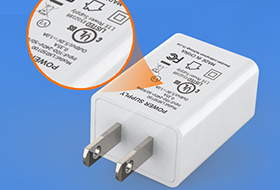
Why you choose our 5V 1A USB Power Adapter with US plug?
Tired of damaging your small gadget batteries with oversized high-watt chargers? That’s exactly why you should choose our 5V 1A USB Power Adapter with US plug. It solves all your daily low-power charging headaches perfectly.
Tired of damaging your small gadget batteries with oversized high-watt chargers? That’s exactly why you should choose our 5V 1A USB Power Adapter with US plug. It solves all your daily low-power charging headaches perfectly.
Why you choose our 5V 1A USB Power Adapter with US plug?
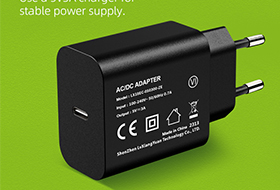
Where Reliability Outshines Speed in Life’s Critical Moments
As floodwaters rose in Jakarta, a nurse plugged a fetal monitor into a weathered adapter. In a Kyiv bomb shelter, volunteers charged emergency radios from a single outlet. At a Nairobi refugee school, children shared one adapter for a donated tablet. Unseen but unbreakable, the 5V 3A USB-C Charger Adapter hummed—a 15-watt lifeline proving that true power lies not in speed, but in steadfast resilience.
As floodwaters rose in Jakarta, a nurse plugged a fetal monitor into a weathered adapter. In a Kyiv bomb shelter, volunteers charged emergency radios from a single outlet. At a Nairobi refugee school, children shared one adapter for a donated tablet. Unseen but unbreakable, the 5V 3A USB-C Charger Adapter hummed—a 15-watt lifeline proving that true power lies not in speed, but in steadfast resilience.
The Unyielding Pulse: How 15 Watts Powers Humanity’s Most Vital Connections
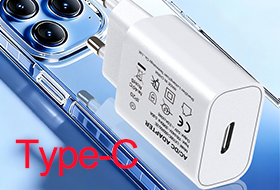
Your Pocket-Sized Power Peacekeeper
Imagine this: You’re unpacking a new blood pressure monitor, wireless earbuds, or a sleek e-reader. Inside the box, you find a small rectangular block—a 5V 2A USB-C Wall Charger. It looks unassuming, but this tiny hero is engineered to power your life’s essentials safely, reliably, and universally.
Imagine this: You’re unpacking a new blood pressure monitor, wireless earbuds, or a sleek e-reader. Inside the box, you find a small rectangular block—a 5V 2A USB-C Wall Charger. It looks unassuming, but this tiny hero is engineered to power your life’s essentials safely, reliably, and universally.
The Quiet Guardian of Your Gadgets: Demystifying the 5V 2A USB-C Wall Charger

Where Renaissance Aesthetics Meet Gallium Nitride Genius
As the morning light filters through a Parisian café window, a coral-orange charger glows beside a cappuccino. In Berlin, a mint-green unit accents a minimalist desk. Across the continent, the PD20W Single USB-C European Standard Colorful Charger is rewriting charging rituals—one vibrant hue at a time.
As the morning light filters through a Parisian café window, a coral-orange charger glows beside a cappuccino. In Berlin, a mint-green unit accents a minimalist desk. Across the continent, the PD20W Single USB-C European Standard Colorful Charger is rewriting charging rituals—one vibrant hue at a time.
Color Your Current: Europe’s Pocket-Sized Power Revolution