


What is a 5V 1A USB-C Charger? The Silent Guardian of Your Small Electronics
author: Anita
2025-08-27
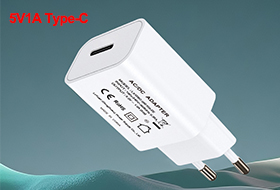
Volts, Amps, and Watts: The Simple Math
A 5V 1A USB-C Charger delivers:
-
5 Volts (V): Standard USB voltage – gentle, stable, and safe.
-
1 Amp (A): Modest current flow (like a calm stream vs. a raging river).
-
5 Watts (W): Total power (5V × 1A = 5W).
⚡ Analogy: Think of voltage as water pressure, amperage as flow rate, and wattage as the total force. For delicate devices, a gentle “5W stream” is safer than a torrential “100W flood.”
USB-C: Not Just for Speed
While USB-C is famed for 100W laptop charging, its universality is revolutionary:
-
Reversible Plug: No more fumbling in the dark.
-
Future-Proof: Replaces micro-USB in all new low-power devices.
-
Safety Protocols: Built-in power negotiation (even at 5W) prevents overloads.
⚠️ Myth: “USB-C = Fast charging.” Truth: It’s a connector, not a power profile.
Inside the Charger: Minimalist Engineering
Crack open a quality 5V 1A USB-C charger (don’t try this!), and you’ll find:
-
AC-DC Converter: Steps down 120V/240V AC to 5V DC.
-
Voltage Regulator: Maintains steady 5V (±5% tolerance).
-
Protection Circuits: Prevents over-current, short circuits.
-
USB-C Controller Chip: Handles device communication.
(Cheap chargers skip #3 and #4 – risking fried devices!)

Why “Just 5W”? The Goldilocks Principle
Some devices thrive at 5W:
-
Too Little (e.g., 0.5A): Won’t charge efficiently.
-
Too Much (e.g., 20W): Risks overheating or battery damage.
-
Just Right: 5V/1A is the sweet spot for:
-
? Wireless earbuds (AirPods, Galaxy Buds)
-
⌚ Smartwatches (Fitbit, Garmin)
-
? Medical sensors (glucose monitors, hearing aids)
-
? Smart home devices (door sensors, trackers)
-
? Data: 87% of IoT devices use ≤5W (IoT Power Report 2024).
Real-World Heroes: Where 5V 1A USB-C Shines
|
Device
|
Why 5V/1A is Ideal
|
|---|---|
|
Hearing Aids
|
Gentle charging preserves battery health
|
|
Glucose Monitors
|
Prevents overheating on sensitive skin
|
|
Wireless Earbuds
|
Matches tiny battery capacity (50-200mAh)
|
|
USB Desk Fans
|
Safe, sustained low-power operation
|
|
Arduino Projects
|
Perfect for prototyping circuits
|
? Lifehack: Keep one in your car’s USB port – it won’t overheat like fast chargers!

Safety First: Why 5V 1A Beats “No-Name” Chargers
Cheap chargers often lack:
-
Voltage Regulation: Spikes can fry microprocessors.
-
Over-Current Protection: Short circuits melt ports.
-
USB-C Communication: Without “handshake,” devices draw unsafe power.
✅ Certifications Matter: Look for UL/CE/FCC marks. A certified 5V 1A USB-C charger costs $3–$8 vs. $1 knockoffs – a small price to protect $200 earbuds!
The “Fast Charging” Trap: When More is Worse
Using a 20W charger on a 5W device risks:
-
Battery Bloat: Lithium-ion cells degrade faster with excess heat.
-
Overcharge Failure: Cheap devices lack advanced power management.
-
Fire Hazard: Documented cases with earbuds and hearing aids.
? Real Incident: A Reddit user’s Galaxy Buds Pro battery swelled after 6 months of 25W charging. Samsung’s fix? “Use the included 5W charger.”
Choosing Wisely: 5 Key Checks
-
USB-C PD? Not needed! Basic 5V/1A chargers skip PD (simpler = cheaper).
-
Cable Quality: Use 28/24 AWG cables (thicker wires = less resistance).
-
Plug Type: Detachable USB-C cable > fixed cable (replace if damaged).
-
Size: Match your device’s port location (e.g., hearing aids need slim plugs).
-
Brand Reputation: Anker, UGREEN, Belkin > no-name AliExpress listings.
The Future: USB-C Ubiquity
By 2027, 100% of new sub-10W devices will use USB-C (USB-IF mandate). This means:
-
No More Micro-USB: One cable for everything.
-
E-Waste Reduction: 8 billion micro-USB cables discarded yearly.
-
Travel Simplicity: Charge your phone, earbuds, and toothbrush with one cable.
♻️ Eco-Impact: Recycling 1M micro-USB cables = 200 tons of copper recovered.
Myth Busting
-
❌ “USB-C chargers are expensive”: 5V 1A USB-C chargers cost $5–$10.
-
❌ “Faster is always better”: Not for coin-cell batteries or medical devices.
-
❌ “All USB-C cables support charging”: Some are data-only – check specs!
When to Upgrade
Replace your charger if:
-
Physical Damage: Cracks, bent ports, frayed cables.
-
Overheating: >50°C surface temp during use.
-
Intermittent Charging: Device disconnects randomly.
Conclusion: Small Power, Big Impact
The 5V 1A USB-C Charger is the quiet guardian of life’s essential mini-devices. It proves that in a world obsessed with speed and power, sometimes gentleness is the ultimate innovation. Next time your earbuds charge reliably for years, thank the humble 5-watt hero in your wall.
Color Your Current: Europe’s Pocket-Sized Power Revolution
What is a 12V 4 Amp Power Supply?
Related Article
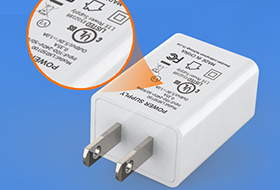
Why you choose our 5V 1A USB Power Adapter with US plug?
Tired of damaging your small gadget batteries with oversized high-watt chargers? That’s exactly why you should choose our 5V 1A USB Power Adapter with US plug. It solves all your daily low-power charging headaches perfectly.
Tired of damaging your small gadget batteries with oversized high-watt chargers? That’s exactly why you should choose our 5V 1A USB Power Adapter with US plug. It solves all your daily low-power charging headaches perfectly.
Why you choose our 5V 1A USB Power Adapter with US plug?
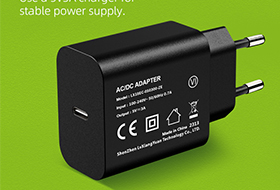
Where Reliability Outshines Speed in Life’s Critical Moments
As floodwaters rose in Jakarta, a nurse plugged a fetal monitor into a weathered adapter. In a Kyiv bomb shelter, volunteers charged emergency radios from a single outlet. At a Nairobi refugee school, children shared one adapter for a donated tablet. Unseen but unbreakable, the 5V 3A USB-C Charger Adapter hummed—a 15-watt lifeline proving that true power lies not in speed, but in steadfast resilience.
As floodwaters rose in Jakarta, a nurse plugged a fetal monitor into a weathered adapter. In a Kyiv bomb shelter, volunteers charged emergency radios from a single outlet. At a Nairobi refugee school, children shared one adapter for a donated tablet. Unseen but unbreakable, the 5V 3A USB-C Charger Adapter hummed—a 15-watt lifeline proving that true power lies not in speed, but in steadfast resilience.
The Unyielding Pulse: How 15 Watts Powers Humanity’s Most Vital Connections
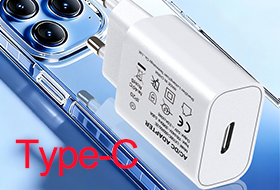
Your Pocket-Sized Power Peacekeeper
Imagine this: You’re unpacking a new blood pressure monitor, wireless earbuds, or a sleek e-reader. Inside the box, you find a small rectangular block—a 5V 2A USB-C Wall Charger. It looks unassuming, but this tiny hero is engineered to power your life’s essentials safely, reliably, and universally.
Imagine this: You’re unpacking a new blood pressure monitor, wireless earbuds, or a sleek e-reader. Inside the box, you find a small rectangular block—a 5V 2A USB-C Wall Charger. It looks unassuming, but this tiny hero is engineered to power your life’s essentials safely, reliably, and universally.
The Quiet Guardian of Your Gadgets: Demystifying the 5V 2A USB-C Wall Charger

Where Renaissance Aesthetics Meet Gallium Nitride Genius
As the morning light filters through a Parisian café window, a coral-orange charger glows beside a cappuccino. In Berlin, a mint-green unit accents a minimalist desk. Across the continent, the PD20W Single USB-C European Standard Colorful Charger is rewriting charging rituals—one vibrant hue at a time.
As the morning light filters through a Parisian café window, a coral-orange charger glows beside a cappuccino. In Berlin, a mint-green unit accents a minimalist desk. Across the continent, the PD20W Single USB-C European Standard Colorful Charger is rewriting charging rituals—one vibrant hue at a time.
Color Your Current: Europe’s Pocket-Sized Power Revolution