


An introduction on Power Adapter global certifications
author: Anita
2024-04-10
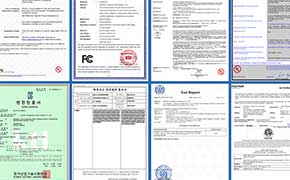
An introduction on Power Adapter global certifications:
As technology has advanced, we have become increasingly reliant on electronic devices to make our lives more convenient.
From smartphones and laptops to gaming consoles and smart home devices, these electronic gadgets require a constant source of power to function.
That's why having a reliable power adapter is key to ensuring that your devices perform optimally and safely.
A certified adapter comes with a seal or certification mark indicating that it meets certain safety and performance standards,
which have been set by regulatory bodies such as FCC, CE, and UL.
These standards ensure that the adapter complies with strict safety requirements and will not harm the user or the device.
This article will provide an overview of the different certification standards for power adapters worldwide.
1. UL (Underwriters Laboratories) Certification
Underwriters Laboratories (UL) is an independent, not-for-profit organization that creates and maintains globally recognized safety standards.
UL evaluates and tests products for safety, performance, and quality, with a focus on workplace safety, electrical safety, product safety, and environmental responsibility.
The UL mark is often seen on electrical equipment, including power adapters, and signifies that a product has undergone stringent testing to ensure it complies with rigorous safety standards.
The UL mark is often seen on electrical equipment, including power adapters, and signifies that a product has undergone stringent testing to ensure it complies with rigorous safety standards.
UL certification ensures that a power adapter has been tested to ensure that it is safe for use and does not harm the user or the device.
2. FCC (Federal Communications Commission)
The Federal Communications Commission (FCC) is an independent agency of the US government,
The Federal Communications Commission (FCC) is an independent agency of the US government,
established to regulate and oversee the communication sector, including telecommunications, radio, TV, and the internet.
The FCC is also responsible for ensuring that electronic devices in the United States comply with its regulations.
Devices that emit radio frequency must meet the FCC's electromagnetic compatibility (EMC) and radio frequency (RF) emission standards, including power adapters.
All power adapters sold in the United States must meet FCC regulations, as indicated by an FCC logo or ID number on the adapter.
All power adapters sold in the United States must meet FCC regulations, as indicated by an FCC logo or ID number on the adapter.
An FCC-certified adapter assures users that the product complies with stringent safety and performance standards.

3. ETL(Electrical Testing Laboratories)
The Electrical Testing Laboratories (ETL) certification is a North American product safety certification issued by the Intertek Testing Services, a globally recognized testing and certification body.
ETL certification ensures that products meet the applicable safety standards, including electrical, fire, and electromagnetic compatibility (EMC) safety standards.
ETL certification can be applied to both consumer electronics and industrial products, with power adapters being no exception.

4. CE (Conformité Européene)
CE marking is essential in the European Union and is a mandatory certification requirement for all electronic devices, including power adapters.
CE marking indicates that the product meets the European Community's safety, health, and environmental protection requirements.
It is also a symbol of compliance with European Union legislation.
Essentially, CE marking shows that the adapter complies with the essential health and safety requirements of all relevant European Union directives,
Essentially, CE marking shows that the adapter complies with the essential health and safety requirements of all relevant European Union directives,
including the Low Voltage Directive (LVD) and the Electromagnetic Compatibility (EMC) Directive.
It also confirms compliance with the Restriction of Hazardous Substances (RoHS) Directive, which restricts the use of six hazardous materials in electronics.
5. ROHS(Restriction of Hazardous Substances)
The Restriction of Hazardous Substances (RoHS) certification is an international standard that restricts the use of hazardous substances in electronic and electrical equipment,
including power adapters. RoHS certification ensures that products meet global standards of safety, health, and environmental protection.
The RoHS standard aims to protect human health and the environment by reducing exposure to hazardous materials in products.
The RoHS directive restricts the use of specific substances, including lead, cadmium, mercury, hexavalent chromium, polybrominated biphenyls (PBB),
and polybrominated diphenyl ethers (PBDE), which are commonly found in electronic devices.

6. UKCA (UK Conformity Assessed)
UKCA certification is a UK product conformity assessment that certifies that the product meets the applicable UK regulations.
The UKCA marking is mandatory for products placed on the UK market that previously required CE marking and are sold in Great Britain (England, Wales, and Scotland).
The UKCA marking came into effect on January 1st, 2021, after the Brexit transition period ended.

7. PSE (Product Safety Electrical Appliance & Material)
In Japan, the Ministry of Economy, Trade, and Industry (METI) is responsible for regulating the electrical appliance safety standards through the Electrical Appliance and Material Safety Act (DENAN).
In Japan, the Ministry of Economy, Trade, and Industry (METI) is responsible for regulating the electrical appliance safety standards through the Electrical Appliance and Material Safety Act (DENAN).
The Japanese PSE mark certifies that all electronic devices, including power adapters, have undergone stringent quality checks and safety tests.
The PSE mark is a mandatory certification requirement for electrical appliances in Japan, and it signifies that the product complies with safety and quality standards set by the Japanese government.
The PSE mark is a mandatory certification requirement for electrical appliances in Japan, and it signifies that the product complies with safety and quality standards set by the Japanese government.

8. KC(Korean Certification)
KC certification is a mandatory certification established by the Korean government that approves electronic devices sold in South Korea.
The certification ensures that the product complies with Korean safety regulations and is safe for consumers to use.
Products that require KC certification include electronic devices, power supplies, telecommunications equipment, and other products that emit radio waves, including power adapters.
9. KCC(Korean Communications Commission)
The KCC certification is also mandatory in South Korea and is specifically established for products that emit radio frequency waves.
The certification ensures that the product meets the standard requirements for electromagnetic compatibility (EMC), radio frequency (RF), and safety.
Products that require KCC certification include radio equipment, telecommunications devices, and other electronic devices, including power adapters.

10. RCM(Regulatory Compliance Mark)
RCM (Regulatory Compliance Mark) is a mark issued for electrical and electronic products sold in Australia and New Zealand.
RCM certification ensures compliance with electrical safety, electromagnetic compatibility, and radio communications standards.
The RCM mark replaced the previous C-Tick and A-Tick compliance marks.
The RCM mark is a symbol of compliance with Australian and New Zealand regulations.
To obtain RCM certification, the power adapter must be tested by a third-party testing and certification body accredited by the Australian Communications and Media Authority (ACMA).
The certification process includes electrical safety, electromagnetic compatibility, and radio communications testing.
Once a power adapter has passed all the relevant standards, it is issued an RCM mark, which indicates the product's compliance with Australian and New Zealand regulations.

11. CB(Certification Body)
The CB (Certification Body) scheme is a global certification system designed to ensure product safety, quality, and performance.
The scheme is managed by the International Electrotechnical Commission (IEC) and operates in over 56 countries.
The CB certification is a comprehensive evaluation of electronic devices, including power adapters, and covers safety, electromagnetic compatibility (EMC), and environmental testing.
The CB certification process involves testing the product to ensure that it meets international safety standards.
The certification process covers a range of aspects, including electrical safety, EMC, and environmental testing.
The certification process is conducted by CB test laboratories, which are accredited by national certification bodies and operate under the rules
established by the IECEE (IEC System for Conformity Testing and Certification of Electrical Equipment).
12. CCC(China Compulsory Certification)
China Compulsory Certification (CCC) is a mandatory certification mark for most products sold in China, including power adapters.
The CCC certification is designed to protect consumers by ensuring that products meet safety, quality, and environmental standards.
The certification is mandatory for most electronic products, including power adapters, and can only be issued by a certification organization
accredited by the China National Accreditation Service for Conformity Assessment (CNAS).

UL certified products from Lvxiangyuan
Why Is GaN Charger So Expensive?
Related Article
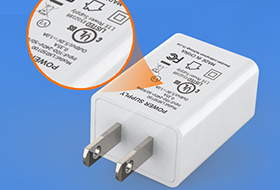
Why you choose our 5V 1A USB Power Adapter with US plug?
Tired of damaging your small gadget batteries with oversized high-watt chargers? That’s exactly why you should choose our 5V 1A USB Power Adapter with US plug. It solves all your daily low-power charging headaches perfectly.
Tired of damaging your small gadget batteries with oversized high-watt chargers? That’s exactly why you should choose our 5V 1A USB Power Adapter with US plug. It solves all your daily low-power charging headaches perfectly.
Why you choose our 5V 1A USB Power Adapter with US plug?
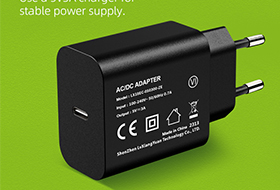
Where Reliability Outshines Speed in Life’s Critical Moments
As floodwaters rose in Jakarta, a nurse plugged a fetal monitor into a weathered adapter. In a Kyiv bomb shelter, volunteers charged emergency radios from a single outlet. At a Nairobi refugee school, children shared one adapter for a donated tablet. Unseen but unbreakable, the 5V 3A USB-C Charger Adapter hummed—a 15-watt lifeline proving that true power lies not in speed, but in steadfast resilience.
As floodwaters rose in Jakarta, a nurse plugged a fetal monitor into a weathered adapter. In a Kyiv bomb shelter, volunteers charged emergency radios from a single outlet. At a Nairobi refugee school, children shared one adapter for a donated tablet. Unseen but unbreakable, the 5V 3A USB-C Charger Adapter hummed—a 15-watt lifeline proving that true power lies not in speed, but in steadfast resilience.
The Unyielding Pulse: How 15 Watts Powers Humanity’s Most Vital Connections
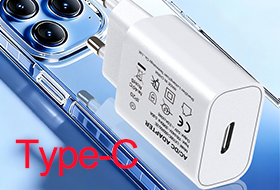
Your Pocket-Sized Power Peacekeeper
Imagine this: You’re unpacking a new blood pressure monitor, wireless earbuds, or a sleek e-reader. Inside the box, you find a small rectangular block—a 5V 2A USB-C Wall Charger. It looks unassuming, but this tiny hero is engineered to power your life’s essentials safely, reliably, and universally.
Imagine this: You’re unpacking a new blood pressure monitor, wireless earbuds, or a sleek e-reader. Inside the box, you find a small rectangular block—a 5V 2A USB-C Wall Charger. It looks unassuming, but this tiny hero is engineered to power your life’s essentials safely, reliably, and universally.
The Quiet Guardian of Your Gadgets: Demystifying the 5V 2A USB-C Wall Charger
Where Renaissance Aesthetics Meet Gallium Nitride Genius
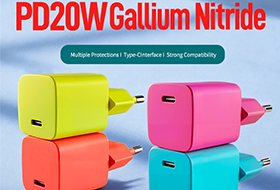
As the morning light filters through a Parisian café window, a coral-orange charger glows beside a cappuccino. In Berlin, a mint-green unit accents a minimalist desk. Across the continent, the PD20W Single USB-C European Standard Colorful Charger is rewriting charging rituals—one vibrant hue at a time.
As the morning light filters through a Parisian café window, a coral-orange charger glows beside a cappuccino. In Berlin, a mint-green unit accents a minimalist desk. Across the continent, the PD20W Single USB-C European Standard Colorful Charger is rewriting charging rituals—one vibrant hue at a time.
Color Your Current: Europe’s Pocket-Sized Power Revolution